January 18, 2026
Reading Time: 9 minutes
Market Strategy
The search monopoly is over. Discover the "Fragmentation Thesis": why 60+ AI models have created a distribution crisis for modern brands and how to achieve neural connectivity in a splintered market.

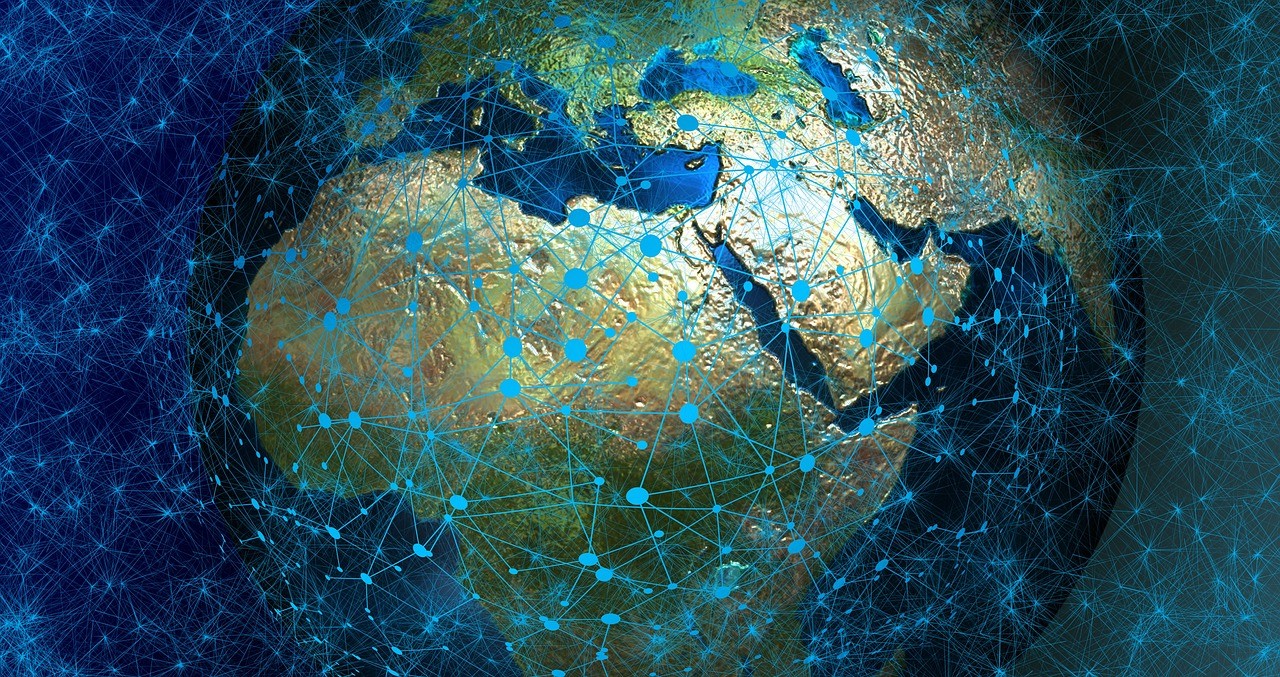
The search monopoly is dead. In its place is a splintered landscape of over 60 competing AI models, each interpreting your brand through a different lens. This is the Fragmentation Thesis: the transition from a "One-to-One" search relationship to a "Many-to-Many" distribution crisis that traditional marketing is not equipped to solve.
The End of the "One-to-One" Era
For two decades, digital strategy was a "One-to-One" game. You optimized for one gatekeeper (Google) to reach one primary interface (the browser). If you satisfied the librarian, you reached the audience. This simplicity allowed for a centralized, often manual, approach to SEO. You could tweak a meta-tag on Monday and see a ranking shift on Friday.
In 2026, that era is over. We have entered the age of Universal Fragmentation.
Today, your brand's truth is no longer being indexed by a single entity. It is being filtered, processed, and transcoded through a massive array of Large Language Models (LLMs) from the foundational giants like ChatGPT, Claude, and Gemini to specialized Answer Engines like Perplexity and emerging open-source clusters like Llama-4. Each of these models has a different "Knowledge Cutoff," a different set of "Ingestion Protocols," and a unique "Reasoning Path."
This is the Fragmentation Thesis: Your brand narrative is no longer a single document on a server; it is a thousand different versions synthesized in the neural streams of 60+ models simultaneously.
The "Many-to-Many" Visibility Crisis
The crisis is one of scale and logistics. In a fragmented world, you face a "Many-to-Many" problem that breaks traditional marketing workflows:
Many Models: 60+ distinct AI engines are crawling, transcoding, and summarizing your brand based on varying datasets.
Many Interfaces: Users are accessing these models via smart glasses, autonomous voice assistants, IDEs, and specialized agents. The "Browser" is just one of many touchpoints.
Traditional SEO teams are trying to solve a Many-to-Many problem with One-to-One tools. They are manually checking "rankings" on Google while 90% of their potential customers are getting an AI-synthesized summary of their brand on a platform the marketing team isn't even monitoring. This is not just a visibility gap; it is Neural Erasure.
The Cost of Manual Inertia
If you try to manually optimize for every model, you will fail. The speed of model updates—fine-tuning, RLHF (Reinforcement Learning from Human Feedback), and live-web integration—happens faster than any human marketing team can react. Without a unified Visibility Intelligence layer, your brand becomes a "Digital Ghost" in most of these models, existing only as a hallucinated fragment or a generic, outdated summary.
Why Models See You Differently: The Synthesis Gap
Fragmentation isn't just about the number of models; it’s about the diversity of their Synthesis Engines. Different models prioritize different signals, creating "Cross-Model Divergence."
Search-Augmented Models (e.g., Perplexity Sonar): These prioritize "Answer Extractability" and technical structure. If your site isn't machine-ready, they will bypass you for a "cleaner" source that is computationally cheaper to parse.
Reasoning-Heavy Models (e.g., Claude 4): These prioritize semantic density and logic. They look for "Expert Bylines" and verified authority to build trust in their summaries. If your content is fluffy, they will categorize you as a low-quality node.
Action-Oriented Models (e.g., Agentic Operators): These prioritize transactional data and API-like structures. If an autonomous agent can’t verify your product specs in milliseconds, it cannot execute the user's request, resulting in a lost transaction.
When your brand data is inconsistent across the web, you suffer from a total loss of Narrative Sovereignty. One model might recommend you, while another using a stale dataset or a different weight on "Freshness" categorizes you as a legacy risk.
The Agentic Crisis: When Machines Can't "Think" About You
In the emerging Agentic Commerce landscape, the stakes are even higher. An AI agent is a decision-maker. If an agent is tasked to "find the best enterprise cloud provider in Asia," it doesn't just read your site; it evaluates your consistency across the entire neural network.
If the agent encounters fragmented data, conflicting pricing on LinkedIn vs. your homepage, or a missing technical spec in your JSON-LD, it will discard your brand as "unreliable." In a Many-to-Many world, Consistency is the only currency.
The Solution: Unified Evaluation Intelligence
To survive the Fragmentation Thesis, you must move from "Search Engine Optimization" to "Neural Stream Synchronization." You need a single point of truth that monitors how the entire ecosystem perceives you.
Establishing the "Master Node"
SYNET acts as the nervous system for this fragmented world. Instead of managing 60 different relationships, you manage one: your Neural Pulse.
Cross-Model Benchmarking: Use SyRank to see your visibility score across all major models simultaneously. Identify which models perceive you as an authority and which ones are drifting toward hallucination.
Unified Signal Ingestion: By optimizing for the "Lowest Common Denominator" of high-authority ingestion (Structure, Semantic, Authority, Technical), you ensure that your data is "Model-Agnostic."
Real-Time Perception Alerts: When a specific model’s summary of your brand begins to drift—perhaps because of a new training run or a data refresh—SyMonitor flags it, allowing you to inject "Freshness Signals" exactly where they are needed.
Conclusion: Dominating the Splintered Web
The search monopoly provided a false sense of security. It made us believe that visibility was a linear path with a single gatekeeper. The Fragmentation Thesis proves that visibility is now a multi-dimensional battlefield.
The brands that win in the post-search economy won't be the ones with the biggest SEO budgets; they will be the ones who achieve Neural Connectivity across the widest range of models. They will be the brands that are so well-synchronized that it becomes computationally "cheaper" for any AI model to tell the truth about them than to hallucinate a narrative.
Neural Q&A
Q: What is the Fragmentation Thesis in AI Search?
A: It is the concept that brand visibility is no longer determined by a single search engine but is fragmented across 60+ different AI models, each with its own data ingestion and synthesis protocols.
Q: Why is manual SEO failing in the AI era?
Q: How can a brand stay consistent across different AI models?